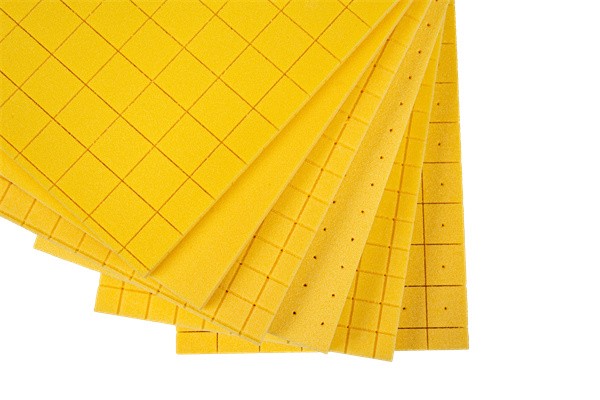
What is fiberglass tissue
Fiberglass tissue, a versatile material with a wide range of applications across various industries, has become an integral part of modern manufacturing and construction. This article aims to provide an in - depth understanding of fiberglass tissue, including its composition, manufacturing process, properties, and diverse uses.
Composition and Structure
Fiberglass tissue is primarily composed of extremely fine glass fibers. These fibers are typically made from materials such as E - glass, which is the most common type due to its excellent balance of mechanical properties, electrical insulation, and cost - effectiveness. The glass fibers are arranged in a non - woven or woven pattern to form a thin, flexible sheet - like structure known as fiberglass tissue.
In non - woven fiberglass tissue, the fibers are randomly oriented and held together by a binder. This random arrangement gives the tissue a uniform appearance and certain isotropic properties, meaning its properties are similar in all directions. On the other hand, woven fiberglass tissue is created by interlacing the glass fibers in a specific pattern, such as plain weave, twill weave, or satin weave. Woven tissues often have higher strength in the direction of the fiber orientation and are more suitable for applications where directional strength is required.
Manufacturing Process
The production of fiberglass tissue involves several key steps. First, the raw materials, mainly silica sand, soda ash, and limestone, are melted in a furnace at extremely high temperatures, typically around 1370 - 1540°C. The molten glass is then forced through tiny nozzles called bushings to form continuous glass filaments. These filaments are extremely thin, with diameters ranging from a few micrometers to tens of micrometers.
For non - woven fiberglass tissue, the continuous filaments are collected on a moving conveyor belt in a random manner. A binder, usually a resin - based solution, is then applied to the fibers to hold them together. The tissue is then passed through a drying oven to remove the solvent from the binder, resulting in a stable non - woven sheet.
In the case of woven fiberglass tissue, the continuous filaments are wound onto bobbins. These bobbins are then used on a loom to weave the fibers into the desired pattern. After weaving, the tissue may also undergo a finishing process, which can include treatments such as coating or impregnation to enhance its properties for specific applications.

Properties
Physical Properties
Fiberglass tissue has several notable physical properties. It is lightweight, which makes it easy to handle and transport. Despite its low weight, it has a relatively high surface area - to - volume ratio, which is beneficial in applications where a large surface area is required, such as in filtration or as a substrate for coatings. The tissue is also flexible, allowing it to conform to irregular shapes and surfaces.
Mechanical Properties
The mechanical properties of fiberglass tissue vary depending on its composition and manufacturing method. Generally, it has good tensile strength, which means it can withstand pulling forces without breaking. Woven fiberglass tissue often has higher tensile strength in the direction of the fiber orientation compared to non - woven tissue. Additionally, fiberglass tissue has good dimensional stability, meaning it maintains its shape and size under normal operating conditions.
Chemical Properties
Fiberglass tissue is highly resistant to corrosion from many chemicals, including acids, alkalis, and solvents. This chemical resistance makes it suitable for use in harsh environments where exposure to corrosive substances is likely. It is also non - combustible, which is an important safety feature in applications where fire resistance is required.
Thermal Properties
Fiberglass tissue has excellent thermal insulation properties. It can effectively reduce heat transfer, making it useful in applications such as building insulation and thermal protection in industrial processes. The tissue can withstand high temperatures without melting or degrading significantly, with some types able to tolerate temperatures up to several hundred degrees Celsius.

Applications
Construction Industry
In the construction industry, fiberglass tissue has a wide range of applications. It is commonly used as a substrate for roofing materials. When combined with bitumen or other waterproofing agents, fiberglass tissue forms a durable and water - resistant roofing membrane. The high tensile strength and tear resistance of the tissue, especially when reinforced across its width, help to prevent cracking, aging, and rotting of the roofing material.
Fiberglass tissue is also used in wall coverings. It can be applied as a surface layer to improve the appearance and durability of walls. The tissue can be coated with various paints or finishes, providing a smooth and uniform surface. Additionally, it can act as a reinforcement layer in wall systems, enhancing the structural integrity and resistance to impact.
Industrial Applications
In industrial settings, fiberglass tissue is used in the manufacturing of pipes and tanks. As a pipe - wrapping tissue, it provides corrosion protection for steel pipelines used in the transportation of oil, gas, and other fluids. The tissue's high tensile strength, flexibility, and resistance to solvents and moisture make it an ideal material for this application.
Fiberglass tissue is also used in the production of filters. Its large surface area and ability to trap particles make it effective in air and liquid filtration systems. It can be used to remove dust, pollutants, and other contaminants from industrial gases and liquids, improving the quality of the processed materials.
Automotive and Aerospace Industries
In the automotive industry, fiberglass tissue is used in the production of body panels and interior components. Its lightweight nature helps to reduce the overall weight of the vehicle, improving fuel efficiency. The tissue can be combined with other materials, such as plastics, to form composite materials with high strength - to - weight ratios.
In the aerospace industry, fiberglass tissue is used in the construction of aircraft components. Its high strength, low weight, and resistance to extreme temperatures and environmental conditions make it suitable for applications such as wing skins, fuselage panels, and interior structures. The tissue's ability to be molded into complex shapes also allows for the production of aerodynamic components.
Conclusion
Fiberglass tissue is a remarkable material with a unique combination of properties that make it suitable for a wide range of applications. Its composition of fine glass fibers, whether arranged in a non - woven or woven pattern, gives it distinct physical, mechanical, chemical, and thermal characteristics. The manufacturing process, which involves melting raw materials and forming fibers, followed by either random collection or weaving, ensures the production of high - quality fiberglass tissue. From its use in the construction industry for roofing and wall coverings to its applications in industrial filtration, automotive body panels, and aerospace components, fiberglass tissue has proven to be an indispensable material. As technology continues to advance, it is likely that new and innovative applications for fiberglass tissue will emerge, further highlighting its importance in modern manufacturing and construction. Fiberglass tissue, with its versatility and wide - ranging benefits, will continue to play a significant role in shaping various industries in the future.