What is the difference between woven and chopped strand fiberglass
Introduction
In the world of composite materials, fiberglass stands as one of the most widely used and versatile reinforcements for industrial, construction, automotive, and consumer product applications. Among the many forms of fiberglass available on the market, woven fiberglass and fiberglass chopped strand are two of the most common, yet they often create confusion for engineers, fabricators, and buyers who are new to composite material selection. Many people assume that all fiberglass products deliver similar performance, but the reality is that choosing between fiberglass chopped strand and woven can drastically change the strength, weight, surface finish, cost efficiency, and manufacturing behavior of the final part. This guide is designed to break down the core characteristics of both materials, explain how fiberglass chopped strand and woven differ in structure, production, and application, and help you determine which option is better suited for your specific project. Whether you are designing a lightweight automotive component, reinforcing a waterproofing membrane, building a marine hull, or producing high-volume consumer goods, understanding the unique advantages of fiberglass chopped strand and woven will help you make smarter material decisions that balance performance and cost.
What is Woven Fiberglass
Woven fiberglass is a continuous form of fiberglass reinforcement created by interlacing untold numbers of long, continuous fiberglass yarns in a systematic weaving pattern. Every thread that makes up woven fiberglass extends across the full width and length of the roll, ensuring that there are no broken or randomly distributed fibers in the structure. The manufacturing process for woven fiberglass begins with the production of continuous fiberglass filaments, which are gathered into strands, sized with a special coating to improve compatibility with resin, and then fed directly into industrial looms. On these looms, the strands are interlaced in warp and weft directions, creating a stable, fabric-like sheet that can be produced in a wide range of weights, thicknesses, and weave styles.
Common weave patterns for woven fiberglass include plain weave, twill weave, satin weave, and unidirectional weave, each offering distinct properties for different end uses. Plain weave woven fiberglass is the most widely used, with threads crossing over and under each other in a simple alternating pattern that delivers excellent dimensional stability and equal strength in both directions. Twill weave woven fiberglass creates a subtle diagonal texture, drapes more easily over complex curves, and is often preferred for high-performance aesthetic parts. Satin weave woven fiberglass has fewer interlacing points, which allows it to lie extremely flat and conform tightly to contoured molds without creating wrinkles. Unidirectional woven fiberglass concentrates almost all of its fiber alignment along one axis, delivering exceptional tensile strength in a single direction for applications that require targeted load-bearing performance.
One of the defining features of woven fiberglass is its high degree of structural consistency. Because every fiber in woven fiberglass runs continuously from edge to edge, the material can carry high loads across large areas without the risk of early fiber pull-out or premature fracture. Woven fiberglass is also extremely flexible in terms of areal weight, with options ranging from ultra-light 50 gsm fabrics designed for delicate surface finishing all the way up to heavy 1000 gsm fabrics used for thick structural laminates in marine and industrial construction. Woven fiberglass rolls are typically produced in standard widths that make them easy to handle, cut, and lay up by hand or with automated layup equipment, making them a staple in hand layup, vacuum infusion, and autoclave composite manufacturing processes.
For many composite fabricators, woven fiberglass is the go-to reinforcement when high mechanical performance, predictable handling, and a smooth, uniform surface finish are top priorities. The continuous fiber structure of woven fiberglass creates a strong, interconnected network that distributes stress evenly across the entire laminate, reducing the risk of localized weak points that can lead to part failure under dynamic or static loads.
What is Fiberglass Chopped Strand
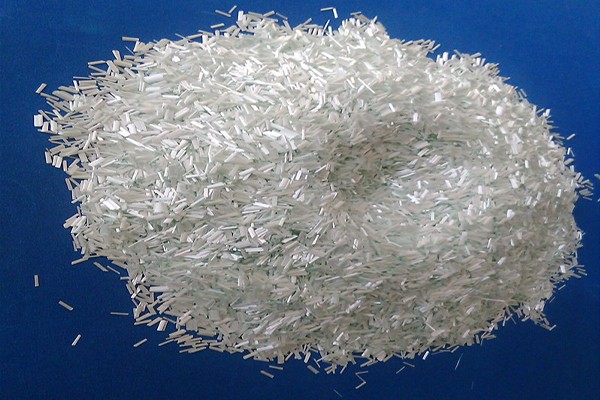
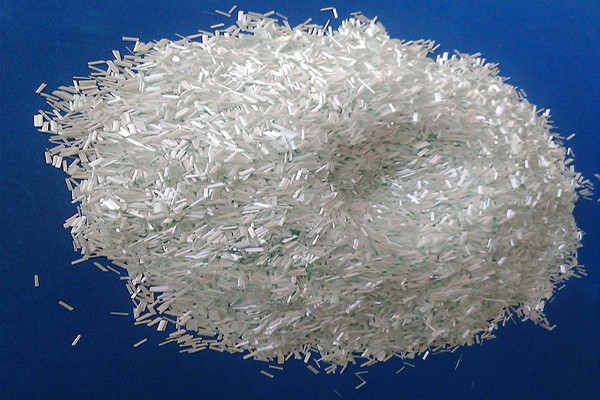
Fiberglass chopped strand is a form of fiberglass reinforcement made by cutting continuous fiberglass strands into short, discrete lengths that are typically between 3mm and 50mm long. Unlike woven fiberglass, which maintains continuous fiber alignment across the entire sheet, fiberglass chopped strand consists of individual short fiber segments that can be distributed randomly or processed into mats for easy handling. The production process for fiberglass chopped strand starts with the same high-quality continuous fiberglass filaments used in woven fiberglass, but instead of being fed into a loom, the strands are gathered, coated with a specialized sizing system tailored for specific resin types, and then fed through high-speed chopping machines that cut them to precise, uniform lengths.
Once the strands are cut, fiberglass chopped strand can be sold in loose, free-flowing form for direct compounding, or deposited onto a moving conveyor belt to form a continuous, non-woven chopped strand mat. In the mat form, fiberglass chopped strand is held together by a small amount of binder that dissolves when it comes into contact with polyester, vinyl ester, or epoxy resin, allowing the short fibers to wet out quickly and conform easily to complex mold shapes. This flexibility is one of the biggest reasons that fiberglass chopped strand has become one of the most widely used reinforcements in the entire composites industry.
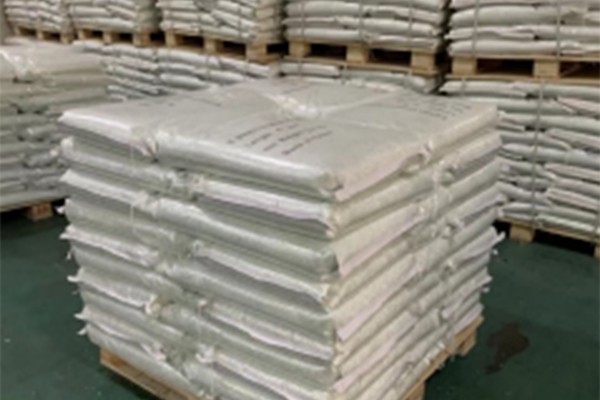
Fiberglass chopped strand is available in a wide range of lengths and sizing formulations, each engineered for a specific manufacturing process. For thermoplastic compounding applications, fiberglass chopped strand is often produced in 3mm to 6mm lengths with a silane sizing that ensures excellent adhesion to PP, PA, PBT, and other engineering plastics. This type of fiberglass chopped strand is added directly into extrusion and injection molding processes, dramatically improving the tensile strength, impact resistance, heat distortion temperature, and dimensional stability of the final plastic parts. For open mold and closed mold thermoset applications, fiberglass chopped strand is often processed into 25mm to 50mm lengths and formed into chopped strand mats that can be quickly layered into molds to build up thickness at a very low cost.
A key advantage of fiberglass chopped strand is its exceptional flow and conformability. Because the short fibers in fiberglass chopped strand have no fixed directional orientation, they can flow freely through complex mold geometries, fill deep ribs, sharp corners, and thin wall sections, and create parts with very consistent mechanical properties across every direction. This random fiber distribution also means that fiberglass chopped strand delivers isotropic strength, meaning the part performs almost identically no matter which direction the load is applied. This is a huge benefit for parts that experience multi-directional stress, where the directional strength of woven fiberglass might leave certain areas vulnerable to unexpected failure.
Fiberglass chopped strand is also extremely cost-effective for high-volume production. The raw material production process for fiberglass chopped strand is far simpler and faster than the weaving process required for woven fiberglass, which translates to lower material costs per kilogram and faster supply chain turnaround for large orders. For manufacturers running injection molding, compression molding, or high-speed continuous lamination lines, fiberglass chopped strand can be fed directly into automated systems without any manual cutting or positioning, drastically reducing labor costs and increasing production output.
Key Differences Between Fiberglass Chopped Strand and Woven
When comparing fiberglass chopped strand and woven, the most obvious difference lies in their fundamental fiber structure. Woven fiberglass is built from long, continuous fibers that are interlaced in a defined geometric pattern, while fiberglass chopped strand is made from short, independently distributed fiber segments that have no fixed interlacing. This single core difference creates a cascade of performance, processing, and economic differences that separate fiberglass chopped strand and woven for almost every key application metric.
First, mechanical performance sets fiberglass chopped strand and woven clearly apart. Woven fiberglass, with its continuous aligned fibers, delivers significantly higher tensile strength, flexural strength, and modulus along the directions of the yarns. A properly laid up woven fiberglass laminate can often achieve 2 to 3 times the tensile strength of an equivalent weight laminate made with fiberglass chopped strand. This is because the long continuous fibers in woven fiberglass can carry load over much longer distances, while the short fibers in fiberglass chopped strand rely entirely on resin adhesion and fiber-fiber friction to transfer stress between individual segments. For applications that require extreme directional strength, such as structural beams, pressure vessels, or high-performance sports equipment, woven fiberglass will almost always outperform fiberglass chopped strand. That said, fiberglass chopped strand has its own mechanical advantage: its random fiber distribution creates perfectly isotropic strength, meaning no single direction is significantly weaker than another. Woven fiberglass, by contrast, can have very low strength at 45 degrees to the weave direction, creating potential failure points in parts that experience off-axis loading.
Second, processing behavior is dramatically different between fiberglass chopped strand and woven. Woven fiberglass requires careful manual or automated layup: you have to unroll the fabric, cut it to exact patterns, position it carefully in the mold, and work out air bubbles by hand to avoid wrinkles and dry spots. Woven fiberglass drapes well over gentle curves, but it can bunch and form gaps when forced into sharp, deep contours, requiring skilled fabricators to make relief cuts and carefully manipulate the fabric into place. Fiberglass chopped strand, on the other hand, is exceptionally forgiving during processing. Loose fiberglass chopped strand can be poured, blown, or injected directly into molds, while chopped strand mat made from fiberglass chopped strand will stretch and conform over almost any complex shape without the need for precise pattern cutting. For compression molding processes, fiberglass chopped strand can be loaded in bulk and pressed into extremely intricate part geometries that would be nearly impossible to achieve with woven fiberglass. This makes fiberglass chopped strand far faster and easier to work with for high-volume, complex part production.
Third, surface finish and aesthetic performance differ greatly between fiberglass chopped strand and woven. Woven fiberglass creates a distinct, visible weave pattern that transfers directly to the surface of the finished laminate. For some applications, this weave pattern is a desirable aesthetic feature, but for many industrial parts that require a perfectly smooth, paintable surface, the weave texture of woven fiberglass has to be hidden under multiple layers of filler and primer. Fiberglass chopped strand, by contrast, creates a much more uniform, matte surface with no visible weave pattern. The random short fibers in fiberglass chopped strand create a fine, even texture that is far easier to sand, prime, and paint to a high-gloss finish without the risk of weave telegraphing showing through the topcoat over time. This is one of the biggest reasons that fiberglass chopped strand is so widely used for automotive body panels, bathtubs, shower stalls, and appliance housings, where a flawless smooth surface is a critical quality requirement.
Fourth, cost efficiency is a major differentiator between fiberglass chopped strand and woven. The production process for woven fiberglass requires expensive looms, slow weaving cycles, and significant labor to convert continuous fiberglass yarn into finished fabric, making it substantially more expensive per kilogram than fiberglass chopped strand. Fiberglass chopped strand skips the entire weaving stage, moving directly from continuous strand production to chopping and mat forming, which creates a much more affordable material for large-volume applications. When building up thick laminate sections, using alternating layers of woven fiberglass and fiberglass chopped strand mat is a common industry strategy that combines the high strength of woven with the low-cost thickness building capability of fiberglass chopped strand, creating a balanced part that performs well without unnecessary material expense.
Finally, resin flow and wet-out behavior separate fiberglass chopped strand and woven in manufacturing. Woven fiberglass has a tightly packed fiber structure that can make it more difficult for resin to fully penetrate through all layers, especially in heavy, high-density fabrics. This can lead to dry spots, poor lamination, and voids if the resin infusion process is not carefully controlled. Fiberglass chopped strand, by contrast, has a much more open, porous fiber structure that allows resin to flow through extremely quickly, ensuring fast, complete wet-out even at very low resin pressures. This fast wet-out characteristic of fiberglass chopped strand drastically speeds up cure cycles and reduces cycle times for high-speed production lines.
Which is Better: Fiberglass Chopped Strand or Woven
The question of whether fiberglass chopped strand or woven is better does not have a single universal answer, because the right choice between fiberglass chopped strand and woven depends entirely on the specific performance requirements, production volume, budget constraints, and end-use conditions of your project.
For applications that prioritize maximum structural strength, high stiffness, and directional load performance, woven will almost always be the better choice. If you are building a high-performance marine hull, a wind turbine blade, an aircraft interior panel, a high-pressure pipe, or a structural beam that needs to carry heavy continuous loads, woven fiberglass delivers far higher mechanical performance than fiberglass chopped strand can achieve. The continuous fiber architecture of woven ensures that stress is distributed efficiently across the entire part, making it possible to build strong, lightweight structures that would be impractical with fiberglass chopped strand alone. Woven is also the preferred choice for high-performance composite parts that are designed for fatigue resistance, as the continuous fibers are far less likely to pull out or break under repeated cyclic loading than the short fibers in fiberglass chopped strand.
However, for high-volume manufacturing, complex part geometries, multi-directional stress conditions, and applications that demand a smooth, consistent surface finish, fiberglass chopped strand is very often the smarter, more practical choice. If you are producing millions of injection-molded plastic components, manufacturing large volumes of bathtub and shower units, making automotive bumper parts, producing electrical insulation components, or running a continuous lamination line for building panels, fiberglass chopped strand will deliver excellent balanced performance at a far lower total cost than woven. Fiberglass chopped strand also excels in applications where isotropic strength is required, because it ensures that no section of the part is unexpectedly weak in a direction that was not anticipated during the design phase. For many general-purpose composite parts that do not require extreme maximum strength, fiberglass chopped strand offers more than enough performance to meet design specifications, while cutting material costs, speeding up production, and reducing labor requirements dramatically.
In many real-world manufacturing scenarios, the optimal solution is not to choose exclusively between fiberglass chopped strand and woven, but to combine them in a hybrid laminate design that leverages the strengths of both materials. A typical hybrid layup might start with a thin layer of fiberglass chopped strand mat on the mold surface to create a smooth, pinhole-free finish, followed by alternating layers of woven fiberglass for high strength and fiberglass chopped strand mat to quickly build up thickness at low cost. This combined approach gives you the smooth surface finish and fast wet-out of fiberglass chopped strand, while capturing the high structural strength and stiffness of woven fiberglass, creating a final part that performs better than either material could achieve on its own. This hybrid strategy is used every day across the marine, automotive, and construction industries to balance performance, cost, and productivity.
Conclusion
Fiberglass chopped strand and woven are two of the most foundational, widely used reinforcement materials in the global composites industry, and each offers a unique set of advantages that make it ideal for specific types of applications. Woven fiberglass, with its continuous interlaced fiber structure, delivers exceptional directional strength, high stiffness, and proven performance for demanding structural applications where maximum load-bearing capacity is the top priority. Fiberglass chopped strand, with its short, randomly distributed fibers, offers outstanding conformability, fast resin wet-out, isotropic multi-directional strength, excellent surface finish, and exceptional cost efficiency for high-volume production.
Understanding the key differences between fiberglass chopped strand and woven is not just a matter of material knowledge — it is one of the most important steps you can take to optimize your composite part design, reduce manufacturing costs, improve final part quality, and avoid unexpected performance failures down the line. There is no universal "best" choice between fiberglass chopped strand and woven, but by carefully evaluating your project’s strength requirements, production volume, surface finish needs, and budget limits, you can select the material or hybrid combination that will deliver the best possible result. Whether you ultimately choose fiberglass chopped strand, woven, or a strategic blend of both, both materials have earned their status as industry standards, and both will continue to play a central role in the future of advanced composite manufacturing for decades to come.