


How to find reliable sheet moulding compound manufacturers and suppliers
You can find a reliable sheet moulding compound manufacturer through a five-step process. First, define your technical and application requirements. Second, research suppliers and build a shortlist. Third, evaluate each candidate on technical performance, application fit, regulatory compliance, and cost. Fourth, verify reliability through audits and certifications. Fifth, confirm the choice with sample testing and pilot runs. Each step builds on the one before it. A clear requirements document sharpens your shortlist. A structured evaluation keeps comparisons fair. Verification and sample testing expose gaps that brochures hide. This guide gives you practical criteria and checkpoints for every step. Apply them in order, and you reduce risk at each stage of your sourcing project.
Key Takeaways
Write a clear requirements document first. This document lists your material needs and performance targets. It helps you compare suppliers fairly.
Research suppliers using directories, trade shows, and referrals. Build a shortlist of three to five candidates. Use one template to compare their specialties and services.
Evaluate each supplier on technical performance, application fit, compliance, and cost. Ask for property data sheets and certifications. Verify certificate numbers with the issuing body.
Verify reliability with factory audits and sample testing. Request free samples and run mechanical and flame tests. A pilot run confirms the production process.
Repeat these five steps for every sourcing project. Each step builds on the one before it. The process gets faster with practice.
Define Technical and Application Requirements
Specify Material and Performance Needs
Start your sourcing project with a written requirements document. List the resin system first: unsaturated polyester grades such as NPG, ISO, or ORO, vinyl ester, or epoxy. Then record the reinforcement type and level. Glass or carbon fiber loading runs roughly 18–60% for SMC and 10–20% for BMC. Add the target properties your part must meet: strength-to-weight ratio, dimensional stability, zero or low shrinkage, high gloss, flame retardancy (HB, V-1, or V-0), and corrosion resistance.
Set numeric targets wherever your application allows. Automotive work often demands high tensile strength, and published grades show the spread. Menzolit SMC 0500, a low-density compound, specifies 60 MPa. Transportation grades such as SMC-2935 reach at least 100 MPa, and energy storage or EV grades such as SMC100 reach at least 120 MPa. General composite materials for automotive parts top out around 85 MPa. Cite the grade and figure you need, and your shortlist will filter itself.
Match Requirements to the Application
Clarify the SMC versus BMC distinction before you contact suppliers. The two compounds suit different part geometries, and the table below summarizes the split.
Aspect | BMC | SMC |
|---|---|---|
Part complexity | Small, complex components; short fibers flow into fine detail | Larger structural parts; continuous fiber limits detail but raises strength |
Typical applications | Circuit breaker housings, connectors, motor end caps, pump impellers | Body panels, EV battery enclosures, electrical cabinets, sanitary ware |
Choose BMC when you need isotropic properties, electrical insulation, and shaping flexibility. Choose SMC when directional strength, impact resistance, and surface finish matter in a large structural component.
Finally, map each requirement to its end use. Automotive parts, electrical boxes, construction panels, bathroom fixtures, and industrial components each carry their own priorities. A bathroom fixture needs gloss and corrosion resistance. An electrical box needs flame ratings and dielectric performance. Write these priorities into the document, and every supplier conversation starts from the same baseline.
Research and Shortlist Sheet Moulding Compound Manufacturers
Where to Find Suppliers
Start with industry directories and top-10 rankings. These lists give you a first pool of names and a sense of each company's scale. Trade shows add a second channel. You meet technical staff face to face and see sample parts in person. Market research reports supply a third route. They often profile producers by region and by end market.
Referrals carry real weight. Ask peers in your sector which sheet moulding compound manufacturer they trust and why. Raw-material suppliers offer a fifth channel. Resin and fiberglass vendors know which producers order consistently and run stable processes. Their customer base reveals reliable partners.
Market research also surfaces benchmark names you will meet repeatedly. Examples include IDI Composites International, Menzolit, Polynt-Reichhold, Continental Structural Plastics (Teijin), and Zoltek (Toray). Treat these as starting points for comparison. Do not rank or endorse any of them at this stage.
Delivery times depend on your location and order size. Most suppliers ship within two to four weeks. Ask your supplier for a clear timeline.
Build a Comparison Shortlist
Narrow your pool to three to five candidates. A short list keeps your evaluation focused and your sample requests manageable. Record each candidate's specialty side by side: SMC, BMC, or epoxy molding compounds. Note the sectors where they have proven experience. Add the support services they offer, such as custom formulation, color matching, and free samples.
Use one shared template for every candidate. Fill in the same fields for each row, and gaps become visible fast. A supplier with strong automotive experience may show thin electrical references. A BMC specialist may lack large-panel capability. The comparison shows where each candidate fits best, and it prepares you for the evaluation step.
Evaluate Suppliers on Performance, Fit, Compliance, and Cost
Technical Performance and Application Fit
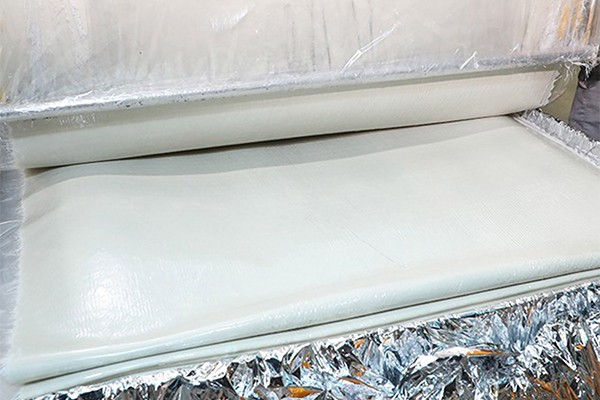
Score each shortlisted supplier against your requirements document. Confirm the formulation matches your application first. Ask for the property data sheet and compare it with your targets. A representative automotive grade shows density of 1.9 g/cm³, flexural strength of 180 MPa, tensile strength of 90 MPa, a heat distortion temperature above 200 °C, and continuous service up to 165 °C. Treat these as average values. Actual figures vary by formulation and customer requirement, so request data for the exact grade you will buy.
Strength-to-weight ratio deserves a direct comparison. SMC's density of 1.78–1.85 g/cm³ is roughly one-fifth that of low-carbon steel at 7.86 g/cm³. That gap gives SMC a high strength-to-weight ratio and removes corrosion risk. The chart below shows the density spread across SMC, steel, and PA66 thermoplastic.
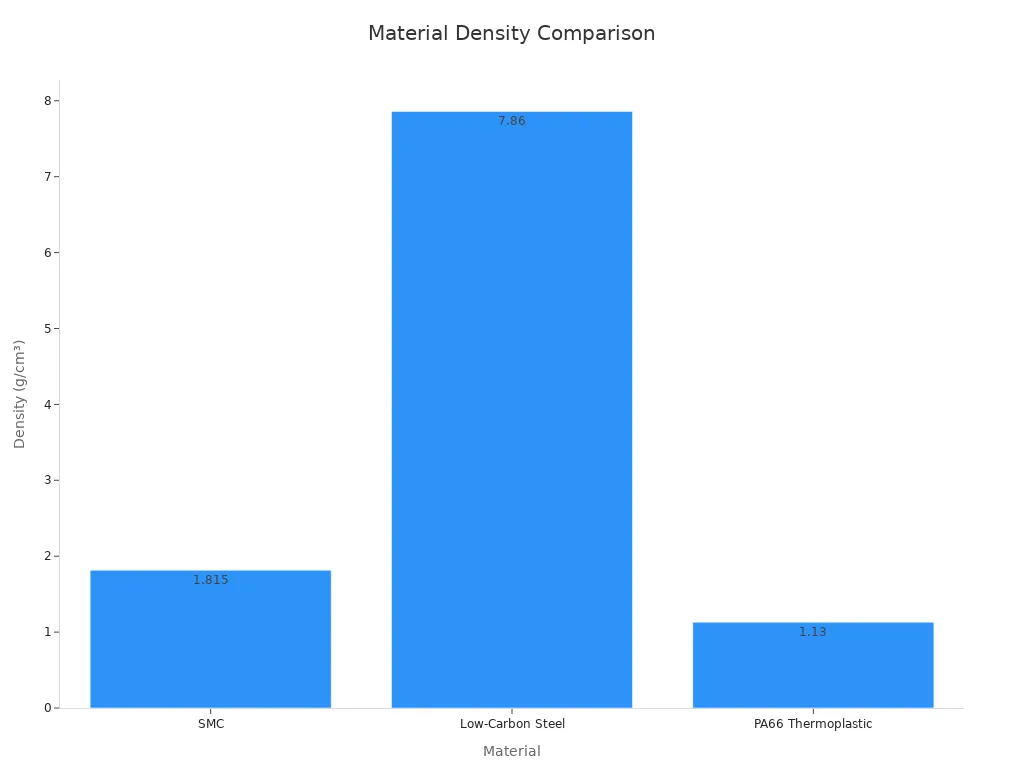
SMC and sheet metal serve overlapping but distinct roles. SMC offers major advantages where corrosion resistance, electrical insulation, and lightweight design matter—such as in EV components, electrical enclosures, and rail interiors. Sheet metal excels in pure structural or load-bearing applications requiring very high stiffness. SMC also enables more complex 3D geometries and requires no secondary painting or anti-corrosion treatment, reducing overall production cost.
Ask about dimensional stability, shrinkage control, and the ability to form complex shapes. Rapid, low-cost production capability matters too. Request tailored formulations where you need high strength, dielectric performance, or consistent curing. Then check application fit. A sheet moulding compound manufacturer with a proven track record in your sector, such as automotive compression molding or electrical components, brings tested process knowledge. Ask for automotive references and confirm their process controls: statistical process control with limits at ±3 sigma, at least five specimens tested per production batch, documented traceability, and third-party validation for critical applications. Probe temperature and vibration tolerance as well. Each claim needs a defined test method, operating condition, and tolerance. Ask how they separate laboratory demonstration from routine production performance. Class-A surface quality, low shrinkage, and low-emission grades are worth confirming for painted body panels.
Regulatory Compliance and Cost
Request certifications and test reports before you negotiate. Flame ratings must match your target level: HB, V-1, or V-0. Color consistency should be measured with a spectrocolorimeter, and a ΔE below 2 is a practical benchmark. Electrical buyers should confirm UL recognition and international standards compliance. Verify each certificate number directly with the issuing body. ISO 9001 and UL file numbers are checkable facts, not marketing claims.
Certification / Standard | Details |
|---|---|
ISO 9001 Certification | Certificate No. 04425Q10157R2S (valid until Feb 17, 2028) |
UL Recognition | UL File No. E538818 |
International standards compliance | IEC, NEMA, DIN, ASTM, and UL standards |
NEMA grade equivalents | G10, FR4, G11, G7, GPO-3 |
IEC equivalents | EPGC series |
Use the typical SMC price range of about $0.90–$2.30 per kilogram as a benchmark when you compare quotes. Weigh price against quality guarantees, free samples, and customization for color, size, and formulation. A low quote with no guarantee often costs more over a production run. Ask each supplier to break down the quote by formulation, tooling, and volume. Volume tiers change the picture fast. Compare landed cost, not unit price alone. A supplier that offers free samples and documented quality control gives you a cheaper path to a verified part.
Verify Reliability and Test Samples
Audits and Certifications
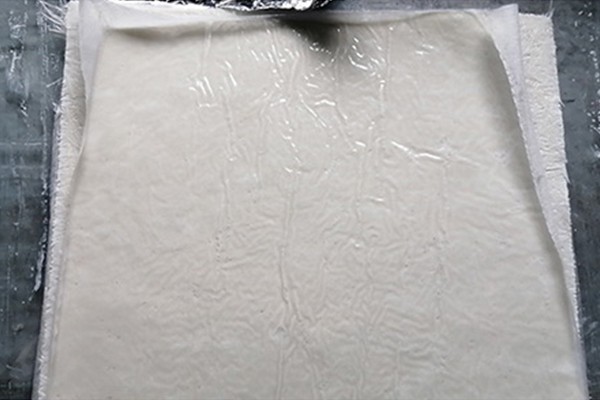
Paperwork starts the verification, and a factory audit finishes it. Check the quality management certification first. Confirm the certificate number with the issuing body, not just the PDF. Then request an on-site or remote factory audit. Walk the line yourself or send an auditor with a checklist. Look for automated production lines, in-house color measurement, and documented inspection records at each stage.
Ask how the plant measures color consistency. A spectrocolorimeter reading with a ΔE below 2 is a practical benchmark. Review the control plan, the calibrated-gauge list, and the batch records. These documents show whether quality control runs every day or only during customer visits. A sheet moulding compound manufacturer with a documented system will answer these requests without hesitation.
Sample Testing and Pilot Runs
Request free samples before you commit to a purchase order. Run mechanical tests against your requirements document: tensile strength, flexural strength, impact resistance, and heat distortion. Add flame tests at your target rating, whether HB, V-1, or V-0. Record every result next to the specification it must meet.
Then confirm packaging and shipping conditions. Ask about pallet weight and container type. Temperature-controlled shipping protects shelf life, and a supplier that ships in reefer containers at 18°C with 1000 kg zig-zag pallets has thought through the logistics. Shelf life of 5–6 months depends on those conditions holding from factory to your dock.
A pilot run closes the loop. Lock down the drawing, material specification, approved deviations, and visual standard before the run starts. Specify the production tool, cavity, equipment, and any subcontracted operations. Define first-article and pilot-lot records in advance. Apply identical measurement definitions at approval and release. Document every change between the sample route and the production route, and approve packaging and labeling so lot identity survives shipment.
Request evidence for each capability category. Material expertise shows up in the compound spec, batch ID, test method, and certificate of analysis. Tooling control appears in the tool drawing, cavity ID, and maintenance history. Process capability lives in the process flow, work instructions, and parameter controls. Change control matters most: ask which changes require your approval before use.
Union Composites illustrates the full verification path without claiming to be the only option. The company holds national technology patents, serves customers in over 50 countries, and documents quality control with a spectrocolorimeter. That combination of patents, a multi-country customer base, and documented QC gives you concrete items to check during your own audit.
Treat these five steps as a repeatable framework for every sourcing project. Define your requirements, research and shortlist candidates, evaluate them on the four criteria, verify through audits, and test samples. Each step feeds the next one. Run the sequence again for your next part or product line, and the process gets faster.
Apply this checklist to your next SMC sourcing project. Write the requirements document first, before you contact any sheet moulding compound manufacturer. A clear document turns vague quotes into comparable offers. Start there, and every later step becomes easier to judge.
FAQ
What price should you expect to pay for sheet moulding compound?
Use roughly $0.90–$2.30 per kilogram as your benchmark. Quotes inside that band usually reflect standard formulations and volume. Compare landed cost rather than unit price alone. Ask each supplier to break the quote down by formulation, tooling, and volume tier. A low quote without a quality guarantee often costs more across a full production run.
Should you choose SMC or BMC for your part?
Match the compound to your part geometry. The table below shows the split.
Your part | Better fit | Why |
|---|---|---|
Small, complex, or highly detailed | BMC | Short fibers flow into fine detail; 10–20% reinforcement |
Large, structural, or surface-critical | SMC | Longer fibers raise strength; 18–60% reinforcement |
Pick BMC for circuit breaker housings and connectors. Pick SMC for body panels, EV battery enclosures, and sanitary ware.
Can you get free samples before placing an order?
Yes. Ask for free samples as a standard request, and treat a refusal as a warning sign. Run mechanical and flame tests against your requirements document. Record each result next to the specification it must meet. Confirm packaging and shipping terms at the same time, because shelf life depends on conditions holding from factory to your dock.
Which documents should you verify before you commit?
Check the quality management certificate and confirm its number with the issuing body. Request the UL file number for electrical grades. Ask for flame test reports at your target rating (HB, V-1, or V-0) and color data from a spectrocolorimeter, where a ΔE below 2 is a practical benchmark. Then request a factory audit.
How long does delivery take, and how does shipping protect the material?
Most suppliers ship within two to four weeks, depending on your location and order size. Ask for a written timeline. Confirm the packaging and container type, since temperature-controlled shipping protects shelf life. A supplier shipping in reefer containers at 18°C with 1000 kg zig-zag pallets has planned the logistics through to your dock.


