What are the materials in sheet molding compound
Sheet Molding Compound (SMC) is a high-performance composite material widely used in industries such as automotive, aerospace, electrical appliances, and sanitation due to its exceptional strength-to-weight ratio, corrosion resistance, and design flexibility. At its core, SMC is a thermosetting composite material composed of a resin matrix reinforced with fibers, along with various additives and fillers that enhance its mechanical properties, processability, and durability. This article delves into the key materials that constitute SMC, exploring their roles and contributions to the material’s overall performance.
Resin Matrix: The Backbone of SMC
The resin matrix in SMC serves as the binding agent that holds the composite together, providing structural integrity and defining its thermal and chemical properties. The most commonly used resins in SMC formulations are unsaturated polyester resins, vinyl ester resins, and epoxy resins.
1.Unsaturated Polyester Resins: These resins are the workhorse of SMC formulations, known for their excellent balance of cost, processability, and performance. They are synthesized by the polycondensation of unsaturated dibasic acids (such as maleic anhydride) with glycols (like propylene glycol or ethylene glycol). The presence of unsaturated bonds in the resin backbone allows for cross-linking during the curing process, resulting in a rigid, thermoset network. Unsaturated polyester resins offer good chemical resistance, mechanical strength, and dimensional stability, making them suitable for a wide range of applications.
2.Vinyl Ester Resins: Vinyl ester resins are a step up in terms of performance, offering superior corrosion resistance and toughness compared to unsaturated polyester resins. They are derived from the reaction of epoxy resins with unsaturated monocarboxylic acids, resulting in a resin with both epoxy and vinyl functional groups. The epoxy portion contributes to excellent adhesion and chemical resistance, while the vinyl groups enable cross-linking during curing. Vinyl ester resins are often used in applications where exposure to harsh chemicals or high temperatures is expected, such as in chemical storage tanks or automotive components.
3.Epoxy Resins: Epoxy resins are known for their exceptional mechanical properties, including high strength, stiffness, and toughness. They are synthesized by the reaction of epichlorohydrin with bisphenol A or other polyols, resulting in a resin with two or more epoxy functional groups. In SMC formulations, epoxy resins are used when the highest levels of mechanical performance are required, such as in aerospace or military applications. However, their higher cost and more complex processing requirements limit their widespread use in SMC compared to unsaturated polyester and vinyl ester resins.
Fiber Reinforcement: Enhancing Strength and Stiffness
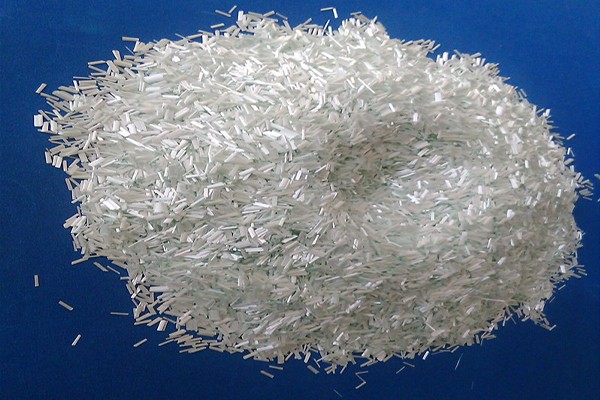
Fiber reinforcement is a critical component of SMC, providing the material with its high strength and stiffness. The fibers in SMC are typically chopped glass fibers or carbon fibers, with glass fibers being the most commonly used due to their cost-effectiveness and good balance of properties.
1.Glass Fibers: Glass fibers are made from molten glass that is drawn into fine filaments and then chopped into lengths ranging from 0.25 to 2 inches (6 to 50 mm). In SMC, the fibers are typically 1 inch (25 mm) or longer, which provides better strength properties compared to shorter fibers used in other composite materials like Bulk Molding Compound (BMC). The glass fibers are uniformly dispersed throughout the resin matrix, creating a strong, reinforced structure that can withstand high loads and stresses. Glass fibers also offer good electrical insulation properties, making SMC suitable for electrical applications.
2.Carbon Fibers: Carbon fibers are made from organic precursors such as polyacrylonitrile (PAN) or pitch, which are carbonized at high temperatures to produce fibers with extremely high strength and stiffness. While carbon fibers are more expensive than glass fibers, they offer superior mechanical properties, including higher tensile strength, modulus, and fatigue resistance. Carbon fiber-reinforced SMC is used in high-performance applications where weight savings and exceptional strength are critical, such as in aerospace components or high-end automotive parts.

Additives and Fillers: Tailoring Properties for Specific Applications
In addition to the resin matrix and fiber reinforcement, SMC formulations often include a variety of additives and fillers that enhance the material’s processability, mechanical properties, and durability. These additives and fillers can be categorized into several groups based on their functions:
1.Thickeners: Thickeners are added to the resin paste to increase its viscosity, preventing the fibers from settling during storage and ensuring uniform fiber distribution during molding. Common thickeners used in SMC include magnesium oxide (MgO) and calcium oxide (CaO), which react with the resin to form a gel-like structure that stabilizes the mixture.
2.Initiators and Catalysts: Initiators and catalysts are used to initiate and control the curing process of the resin matrix. Common initiators include organic peroxides, such as benzoyl peroxide or methyl ethyl ketone peroxide (MEKP), which decompose at elevated temperatures to generate free radicals that initiate cross-linking. Catalysts, such as cobalt naphthenate, are used to accelerate the curing reaction, reducing the required curing time and temperature.
3.Low-Shrink Additives: Low-shrink additives are added to the resin paste to reduce shrinkage during curing, which can lead to warping or dimensional instability in the finished part. These additives, such as thermoplastic polymers or inorganic fillers, create a microstructure within the resin that counteracts the shrinkage forces, resulting in a more dimensionally stable part.
4.Fillers: Fillers are added to the resin paste to reduce cost, improve mechanical properties, or modify the material’s appearance. Common fillers used in SMC include calcium carbonate (CaCO₃), talc, and glass beads. Calcium carbonate is a low-cost filler that can improve the stiffness and hardness of the material, while talc offers good lubricity and can improve the flow properties of the resin paste. Glass beads are used to improve the dimensional stability and reduce the weight of the material.
5.Internal Release Agents: Internal release agents are added to the resin paste to facilitate the release of the molded part from the mold, reducing the need for external release agents and improving the surface finish of the part. Common internal release agents include waxes or silicone-based compounds that migrate to the surface of the resin during curing, creating a non-stick layer between the resin and the mold.
Conclusion
Sheet Molding Compound (SMC) is a versatile and high-performance composite material whose composition is carefully tailored to meet the demands of various applications. The resin matrix, typically an unsaturated polyester, vinyl ester, or epoxy resin, provides the structural backbone of the material, while the fiber reinforcement, usually chopped glass or carbon fibers, enhances its strength and stiffness. Additives and fillers, such as thickeners, initiators, low-shrink additives, fillers, and internal release agents, further refine the material’s properties, ensuring optimal processability, mechanical performance, and durability. By understanding the materials that constitute SMC, engineers and manufacturers can make informed decisions when selecting this material for their applications, leveraging its unique combination of strength, lightweight, and design flexibility to drive innovation and efficiency in their industries. As the demand for high-performance, sustainable materials continues to grow, Sheet Molding Compound (SMC) is poised to play an increasingly important role in shaping the future of manufacturing.