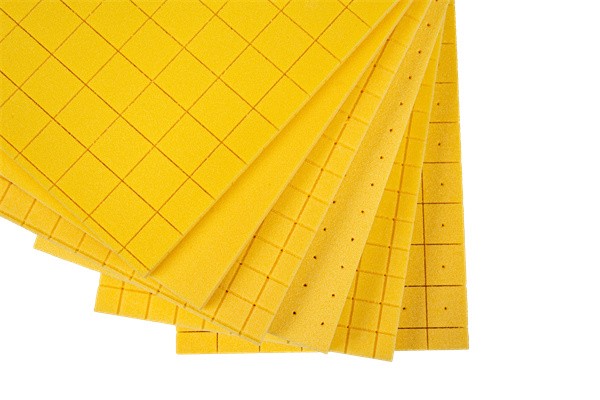
How strong is pvc foam board
PVC foam board, a lightweight yet robust material derived from polyvinyl chloride (PVC) through advanced foaming processes, has emerged as a cornerstone in industries ranging from aerospace to construction. Its strength-to-weight ratio, coupled with versatile mechanical properties, makes it a preferred choice for applications demanding durability without compromising efficiency. This article delves into the structural integrity, performance metrics, and real-world applications of PVC foam board to answer the question: How strong is it really?
Core Strength Metrics: Beyond Lightweight Durability
The strength of PVC foam board is quantified through standardized tests measuring compression, shear, and tensile properties. For instance, the IFUCAI CELL series (density grades D60, D80, D100) demonstrates:
Compression Strength: Ranging from 0.996 MPa (D60) to 2.08 MPa (D100) under ISO 844:2006 standards, these values surpass traditional wood composites and rival low-density metals in specific load-bearing scenarios.
Shear Resistance: Achieving 0.914–1.66 MPa (ISO 1922:2012), the material withstands lateral forces without delamination, critical for structural sandwich panels in wind turbine blades.
Tensile Modulus: From 96.1 MPa (D60) to 152 MPa (D100) (ASTM C297), PVC foam board resists elongation under tension, ensuring dimensional stability in curved or stressed components.
Notably, the JCCELL PVC foam board extends these capabilities with densities up to 300 kg/m³, offering compression moduli exceeding 150 MPa for high-performance aerospace applications. These metrics are further reinforced by GB/T 41532-2022 standards, which mandate a minimum compression strength of 2.5 MPa (longitudinal) for structural-grade PVC foam, ensuring compliance in critical infrastructure projects.
More information about the strength of PVC foam can be found here.

Environmental Resilience: Strength Under Stress
PVC foam board’s strength is not limited to static loads—it excels in dynamic environments. Its closed-cell structure (≥90% porosity) provides:
Thermal Stability: Withstanding temperatures from -240°C to 100°C, it maintains integrity in extreme climates, such as Arctic construction or desert solar installations.
Moisture Resistance: A low water absorption rate (<3%) prevents swelling or degradation, making it ideal for marine applications like yacht hulls and dock components.
Chemical Inertness: Resistant to acids, alkalis, and salts, PVC foam board replaces metal in chemical processing equipment, avoiding corrosion-related failures.
In wind energy, for example, PVC foam cores in turbine blades endure cyclic fatigue for 20+ years, thanks to a compression creep strength that outperforms polyurethane (PU) alternatives by 30%.
Real-World Applications: Strength in Practice
The material’s strength translates into transformative use cases:
Transportation: Used in high-speed train floors and aircraft interior panels, PVC foam board reduces weight by 40% versus aluminum while meeting crash safety standards.
Construction: As building formwork, it supports fresh concrete loads up to 6 kN/m², enabling reusable molds that cut costs by 25%.
Healthcare: In COVID-19 field hospitals, PVC foam boards formed modular partitions and test counters, leveraging their antimicrobial surface and impact resistance.
Creative Industries: From museum exhibits to theater sets, its machinability (CNC machining, laser cutting) allows intricate designs without sacrificing structural soundness.

Conclusion: The Unmatched Versatility of PVC Foam Board
PVC foam board redefines strength through a synergy of lightweight design, mechanical resilience, and environmental adaptability. Whether bearing the weight of a wind turbine blade or enduring the humidity of a tropical construction site, this material proves that strength need not come at the cost of efficiency. As industries continue to prioritize sustainable, high-performance solutions, PVC foam core stands out as a testament to innovation—proving that a foam can indeed be as strong as steel in the right applications. Its evolving grades and certifications ensure it will remain indispensable in the next era of engineering challenges.
- Prev: How to color epoxy resin
- Next: How to clean epoxy resin