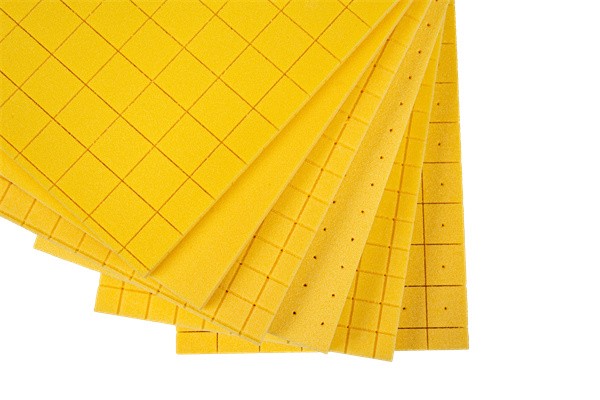
What is sheet molded compound
Sheet molded compound is a high-performance composite material made by combining fiberglass with resin. You will find it essential in modern manufacturing because it offers strength, durability, and chemical resistance. Union Composites leads the industry by providing top-quality SMC with advanced technology and reliable consistency.
SMC serves many industries, including:
Automotive: EV battery housings, exterior panels
Energy: Wind turbine blades, solar panel frames
Construction: Roof panels, bathroom fixtures
Electrical: Distribution boxes, motor housings
Year | Market Size (USD Billion) | CAGR |
|---|---|---|
2024 | 1.5 | N/A |
2033 | 2.8 | 7.5% |
This material’s wide use and growing market prove its importance for your projects.
Key Takeaways
Sheet molded compound is a strong and lightweight material used in many industries.
SMC is made from fiberglass, resin, and additives, offering high strength and durability.
Automotive, electrical, and construction industries use SMC for various parts and panels.
SMC is lighter than metal, helping reduce weight and improve fuel efficiency in vehicles.
Union Composites provides high-quality SMC with customizable options for different projects.
What is sheet molded compound?
Sheet molded compound is a type of composite material that you can use to make strong and lightweight parts. You will find it in many industries because it combines high performance with easy processing. This material uses a mix of fibers, resins, and additives to create a product that meets many needs.
SMC composition
You will see that sheet molded compound contains three main parts:
Resin Matrix: This acts as the glue that holds everything together. Common types include unsaturated polyester, vinyl ester, and epoxy resins. Unsaturated polyester resin is popular because it is cost-effective and gives good mechanical properties. Vinyl ester resins offer better resistance to corrosion, while epoxy resins provide extra strength for demanding jobs.
Fiber Reinforcement: Most SMC uses chopped glass fibers. These fibers give the material its strength and stiffness. Sometimes, manufacturers use carbon fibers for even higher performance.
Additives and Fillers: These help control the final properties. For example, mineral fillers like calcium carbonate or talc can improve the surface finish and lower costs. Thickeners make the mixture easier to handle.
Tip: The right mix of resin, fibers, and additives lets you customize SMC for your project.
Key characteristics
When you choose sheet molded compound, you get a material with impressive features:
High mechanical strength and impact resistance
Good toughness and wear resistance
Excellent performance at high temperatures
Superior electrical insulation
Flame retardant, meeting strict safety standards
Low shrinkage and stable dimensions
Here is a table showing some typical properties:
Property | Unit | Typical Value |
|---|---|---|
Density | g/cm³ | 1.7–1.9 |
Flexural strength (room temperature) | MPa | ≥130 |
Tensile strength | MPa | ≥50 |
Compressive strength (under 130℃) | MPa | ≥150 |
Temperature of deflection under load | ℃ | ≥220 |
Insulation resistance | Ω | ≥1.0x10¹² |
Dielectric strength | kV/mm | ≥12.0 |
Flammability | Class | V-0 |
You will notice that sheet molded compound is much lighter than steel or aluminum. For example:
Material | Density (g/cm³) |
|---|---|
SMC | 1.7–1.9 |
Steel | ~7.85 |
Aluminum | ~2.7 |
This means you can use SMC to make parts that are strong but not heavy. That is why car makers and other industries choose it for panels and covers.
Sheet molded compound manufacturing

You can see that making sheet molded compound involves careful selection of materials and precise steps. Union Composites uses advanced technology and automated production lines to deliver consistent quality and high efficiency. You will find that this process allows for customization and guarantees reliable performance.
Raw materials
You need high-quality raw materials to produce sheet molded compound. Each material comes from trusted sources. Here is a table showing the main ingredients and where you get them:
Raw Material | Typical Source |
|---|---|
Chopped glass fibers | Glass fiber manufacturers |
Polyester or vinyl ester resin | Chemical manufacturers |
Fillers (e.g., calcium carbonate, aluminum trihydrate) | Mineral suppliers |
Additives (e.g., thickeners, catalysts, pigments) | Chemical suppliers |
You select these materials based on your project needs. The right mix gives you the strength, durability, and appearance you want.
Production process
You follow a series of steps to make sheet molded compound. Each step helps you achieve the best quality and performance. Here is how the process works:
SMC Sheet Manufacturing: You apply resin paste onto a carrier film. You deposit chopped glass fibers on top. You add another layer of resin and compact the sheet to make it uniform.
Maturation (Thickening): You store the sheet so the viscosity increases. This step prevents resin from flowing out and improves mold filling.
Charge Preparation: You cut, weigh, and stack the matured sheet according to the mold design.
Compression Molding: You place the charge in a heated mold. You close the mold under high pressure and cure the material.
Demolding and Finishing: You remove the molded part. You trim and finish it as needed.
Union Composites uses automated production lines. These lines give you several advantages:
Advantage | Description |
|---|---|
High production efficiency | You get faster manufacturing cycles. |
Excellent surface finish | You achieve Class A surfaces for better quality. |
Tight dimensional tolerances | You ensure precise dimensions and less rework. |
Low scrap and waste | You minimize material loss and save costs. |
Complex designs | You can integrate ribs, bosses, and inserts in one process. |
Tip: Automated lines help you get consistent results and reduce errors.
Quality assurance
You want your sheet molded compound to meet strict standards. Union Composites follows a quality management system with certifications like ISO 9001 and IATF 16949. These certifications ensure you get consistent product quality, full traceability, and continuous improvement.
You can request customized solutions. You choose material types, colors, textures, and other features to match your project. Here are some options you can select:
Customization Options | Description |
|---|---|
Material Choices | You pick thermoplastics, thermosets, or elastomers for your application. |
Versatility | You customize color, texture, flexibility, or rigidity. |
Secondary Services | You use 3D CAD Imaging, Assembly, Custom Color Matching, and more. |
Union Composites gives you a 100% quality guarantee. You receive free samples to test before you decide. You can trust that your sheet molded compound will perform reliably in your industry.
Properties of SMC
Mechanical strength
You can rely on sheet molded compound for impressive mechanical strength. This material stands out because it combines high tensile and flexural strength with a lightweight structure. You will see that SMC parts often match the strength of aluminum alloys but weigh much less. This makes them perfect for places where you need strong parts that do not add extra weight, like car body panels or aerospace covers.
Material Type | Tensile Strength (MPa) | Flexural Strength (MPa) |
|---|---|---|
Sheet Molding Compound (SMC) | 50–125 | 120–230 |
Aluminum Alloys | Comparable |
You get a strong material that helps you reduce weight without losing performance.
Chemical resistance
You will find that SMC offers excellent chemical resistance. The crosslinked structure of thermoset resins blocks chemicals from entering and breaking down the material. This means you can use SMC in harsh environments, such as electrical housings or outdoor panels, and expect it to last.
Thermosets like SMC resist chemical penetration and degradation.
Thermoplastics are durable but can suffer from chemical attack and UV damage.
Metals are strong but may corrode unless treated, while SMC naturally resists corrosion.
️ SMC keeps its strength and shape even when exposed to chemicals, moisture, or UV light.
Physical attributes
You will notice that SMC has stable physical properties. It does not change shape easily when temperatures rise or fall. The low thermal expansion coefficient helps SMC keep its exact dimensions, which is important for precision parts. You can use SMC in engine compartments or electrical devices and trust that it will stay reliable.
SMC’s dimensional stability makes it a smart choice for applications where accuracy matters.
Applications of sheet molded compoundAutomotive uses
You see sheet molded compound used in many car parts. Manufacturers choose it because it helps reduce vehicle weight and improve fuel efficiency. You can find SMC in:
Hoods
Roofs
Tailgates
Fender panels
Structural reinforcements
When you replace steel or aluminum with SMC, you lower the weight of the vehicle. Ford’s F-150 pickup trucks use SMC hoods. These hoods weigh up to 30% less than steel ones. This change helps you save fuel and reduce emissions. You also keep the same level of safety.
SMC lets you build lighter cars that use less fuel and protect the environment.
Electrical and electronics
You rely on SMC for safe and durable electrical products. It works well for enclosures and insulating parts. Common uses include:
Circuit breakers
Switchgear enclosures
Insulating and flame-retardant components
Electrical panels and enclosures
Insulating materials
SMC offers several advantages over other materials. Here is a table showing why you might choose it:
Advantage | Description |
|---|---|
Electrical Insulation | SMC does not conduct electricity, so it keeps devices safe. |
Resistance to Environmental Factors | SMC stays strong in humid places, perfect for switchboxes. |
Durability | SMC resists heat and fire, making it reliable for enclosures. |
You get excellent insulation and protection for your electrical systems.
Construction industry
You use SMC to make strong and weather-resistant building parts. It is popular for panels and fixtures. You can find SMC in:
Exterior cladding
Window frames
Door panels
Electrical junction boxes
Ceilings
Wall panels
Water tanks
SMC panels resist moisture and chemicals. You can install them in places where you need long-lasting materials.
SMC helps you build safer and more durable structures.
Other sectors
You see SMC in many other industries. It is valued for strength and insulation. Here is a table showing some examples:
Industry | Applications |
|---|---|
Automotive | Headlight housings, motor brackets |
Aerospace | Lightweight parts for aircraft |
Electrical | Insulators, switch boxes |
Industrial | Parts needing strength and electrical safety |
You can use SMC for consumer goods and industrial equipment. It gives you reliable performance in demanding environments.
SMC adapts to many fields, making it a smart choice for your next project.
Advantages and limitations
Benefits of SMC
You gain many advantages when you choose sheet molded compound for your projects. SMC stands out because it is strong enough to replace metal in many applications. You can make lighter products, which is important for vehicles and machinery. SMC has a high strength-to-weight ratio, about one-fifth the density of steel. This makes it ideal for parts where reducing weight matters.
SMC is significantly lighter than metal.
You get high mechanical strength and durability.
SMC resists corrosion, so your parts last longer.
Here is a table showing key benefits:
Benefit | Description |
|---|---|
Cost-effectiveness | SMC’s production process is simple and scalable, allowing for efficient large-scale manufacturing. |
High strength-to-weight ratio | SMC is significantly lighter than metal, making it suitable for weight-sensitive applications. |
Corrosion resistance | SMC eliminates corrosion risks, enhancing durability in various environments. |
You also save money because SMC parts require less maintenance. You can customize SMC for your specific needs, making it a versatile choice.
Common drawbacks
You should know some limitations before you select SMC. Once you mold SMC, it becomes rigid. You cannot easily change its shape by drilling or cutting. SMC is not biodegradable, so you must dispose of it properly to protect the environment.
Limited flexibility in post-processing
Environmental impact due to non-biodegradability
Note: You need to plan your design carefully to avoid extra work after molding.
Selection considerations
You must consider several factors when choosing SMC for your application. The needs of your project will guide your decision. SMC works well for high-volume production and complex designs. You should look at cost, mechanical properties, and how much strength your part needs.
Factor | Description |
|---|---|
Application Requirements | The specific needs of the application dictate the choice of SMC, especially for structural components. |
Production Volume | High-volume production scenarios benefit from SMC's efficiency and reduced waste. |
Cost | Cost considerations can influence the choice between SMC and other materials like BMC. |
Design Complexity | SMC is suitable for complex designs due to its continuous fiber reinforcement and sheet form. |
Mechanical Properties | SMC offers high directional strength and excellent impact resistance, making it ideal for certain applications. |
Tip: You can talk to experts at Union Composites to help you select the right SMC for your project.
You have learned that sheet molded compound gives you strength, durability, and design flexibility for many industries. You can trust Union Composites to deliver high-quality SMC with advanced technology and reliable service. As car makers look for lighter materials to meet new rules and build electric vehicles, you will see SMC become even more important.
Choosing the right SMC helps you create safer, greener, and more efficient products for the future.
FAQ
What is sheet molding compound (SMC)?
Sheet molding compound is a composite material. You get it by combining fiberglass with resin and additives. SMC gives you strong, lightweight parts for many industries.
How does SMC compare to metal parts?
You can use SMC to replace metal in many applications. SMC weighs less than steel or aluminum. You get high strength and corrosion resistance.
SMC helps you reduce weight and improve durability.
Can you customize SMC for your project?
Yes, you can request custom colors, sizes, and formulations. Union Composites offers tailored solutions. You get free samples to test before you decide.
Custom Option | Description |
|---|---|
Color | Choose any shade |
Size | Select dimensions |
Formulation | Adjust properties |
What industries use SMC?
You find SMC in automotive, electrical, construction, and consumer goods. SMC works well for panels, housings, and structural parts.
Automotive
Electrical
Construction
Industrial